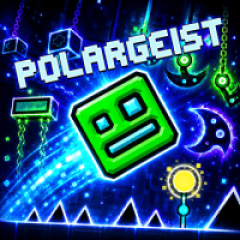
Although Geometry Dash Polargeist is considered a beginner-friendly level, some parts can still cause many failures. Understanding these sections before playing can help you prepare and avoid repeating the same mistakes.
The beginning of the level looks simple, but it teaches an important lesson about timing. Many beginners fail because they press the jump button too quickly without understanding the movement pattern.
The early sections require controlled clicks rather than fast reactions. Take your time and focus on building a consistent rhythm.
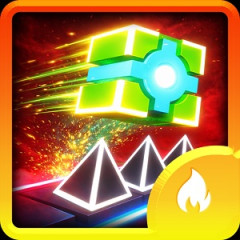
The triple spike areas are some of the most common places where new players lose their progress.
These obstacles require accurate jumps because there is very little space for mistakes. A small timing error can immediately end your attempt.
The best approach is to watch the cube's position and jump slightly earlier than your first instinct. With practice, these sections become much easier.
Jump rings can confuse beginners because they work differently from normal jumps. Players need to activate them at the correct moment to gain extra height and avoid obstacles.
Many failures happen because players click too early or forget that jump rings require active timing.
Practice these sections repeatedly until the movement becomes natural.
Near the end of Geometry Dash Polargeist, players often become nervous because they are close to completing the level. This pressure can lead to unnecessary mistakes.
Stay calm and maintain the same rhythm you used during practice. Reaching the final part does not mean you should rush.
Completing Geometry Dash Polargeist is not only about quick reactions. Good strategies and proper practice methods can significantly improve your success rate.
One of the biggest mistakes beginners make is clicking repeatedly without a plan.
Random clicking usually destroys your timing and makes the level harder. Every jump in Geometry Dash Polargeist has a specific rhythm, so your goal should be controlled and accurate movements.
Instead of pressing constantly, focus on learning when each jump should happen.
Many players focus too much on the spikes and obstacles ahead. However, watching the cube's position is often more helpful.
By observing how the cube moves, you can understand:
This method helps create better control and reduces panic during difficult sections.
Practice Mode is one of the most useful features for learning Geometry Dash Polargeist.
Before trying to complete the level in Normal Mode, activate Practice Mode and place checkpoints in difficult areas.
This allows you to:
Practice does not mean you are playing incorrectly. Even experienced Geometry Dash players use this feature to learn new levels.
The soundtrack provides valuable timing information. Playing Geometry Dash Polargeist with sound allows you to match your jumps with the beat.
Using headphones can make it easier to recognize patterns and react at the right moment.
Geometry Dash Polargeist is rated as a 3-star level. It is designed as an early challenge that introduces players to more advanced mechanics, including jump rings and faster obstacle patterns.
Although the difficulty is not extremely great, beginners may still need several attempts before completing it.
Yes. Geometry Dash Polargeist is considered a good level for beginners because it teaches important skills needed for future levels.
Players can learn:
It provides a good balance between challenge and reward.
Yes, it is possible to complete Geometry Dash Polargeist without Practice Mode. However, it may take more attempts, especially for new players.
Practice Mode makes learning faster because you can focus on specific, difficult sections instead of replaying the entire level.
For beginners, using Practice Mode is usually the easiest way to understand the level structure.
The completion time depends on your experience and reaction skills.
New players may need dozens of attempts before finishing the level, while experienced players can complete it much faster.
Most players improve quickly because the level teaches clear patterns that become easier to remember after repeated practice.
Players who enjoy advanced rhythm challenges may eventually want to test their skills with harder stages such as Geometry Dash Tidal Wave, a demanding level known for requiring extremely accurate timing and fast reactions.