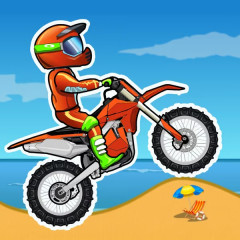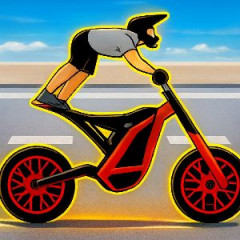
The main objective in Hill Climb Racing is to drive as far as possible before your vehicle crashes or runs out of fuel. Every meter you travel increases your score, encouraging you to improve with every attempt.
Unlike traditional racing games where finishing first is the goal, success here depends on endurance. Long-distance driving rewards careful decision-making instead of reckless speed.
Each new run provides another opportunity to discover better routes, improve your control, and set a new record.
Driving quickly may seem like the fastest way to earn points, but excessive speed often causes accidents.
Your vehicle constantly reacts to gravity, hills, bumps, and jumps. Accelerating too much on steep slopes can flip your car, while braking too aggressively may prevent you from climbing the next hill.
Experienced players learn to adjust their speed based on the terrain rather than holding down the accelerator throughout the race.
Every environment offers unique challenges.
Some hills require maximum power to climb.
Others demand careful braking during steep descents.
The more familiar you become with different landscapes, the easier it becomes to predict how your vehicle will behave and maintain control over longer distances.
Fuel management is one of the most important mechanics in Hill Climb Racing.
Your fuel gauge slowly decreases as you drive. Once it runs out of fuel, the journey ends immediately, regardless of how well you're controlling your vehicle.
Fortunately, fuel cans appear throughout every level.
Collecting them refills your tank and allows you to continue your adventure.
Fuel pickups are not always placed conveniently.
Sometimes you'll need enough momentum to reach the next fuel can safely.
Other situations require slowing down to avoid crashing before collecting it.
Watching both the road and your fuel meter helps you make smarter driving decisions.
Many beginners become distracted by coins or difficult jumps and accidentally miss nearby fuel cans.
Missing just one fuel pickup can end an otherwise excellent run.
Developing the habit of prioritizing fuel greatly improves your chances of achieving high scores.
Coins are scattered across hills, valleys, and ramps throughout every level.
Collecting them allows you to improve your vehicle's performance, making future runs much easier.
The farther you drive, the more opportunities you'll have to earn additional coins.
One of the most satisfying aspects of Hill Climb Racing is upgrading your vehicle.
Popular upgrades include:
Improving these components helps your vehicle climb steeper hills, land more smoothly after jumps, and travel greater distances.
Instead of spending coins randomly, upgrading weaker areas first usually produces better results.
As you continue collecting coins, new vehicles become available.
Each one offers different strengths.
Some are excellent for climbing mountains.
Others perform better on rough terrain or long-distance runs.
Experimenting with different vehicles keeps the gameplay fresh while allowing you to discover which driving style suits you best.
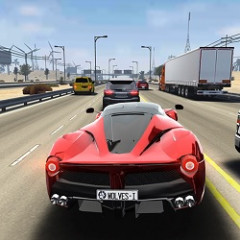
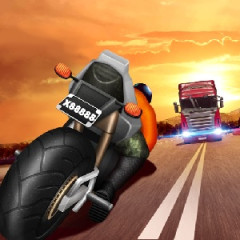
Fans who enjoy mastering vehicle control in Hill Climb Racing can continue their driving adventure with Racing Limits. While Hill Climb Racing focuses on physics-based hills and careful balance, Racing Limits offers fast-paced highway traffic, realistic overtaking, and thrilling speed. Playing both games lets you experience two very different styles of driving while sharpening your reflexes and precision behind the wheel.